Fall is officially upon us. The leaves are changing as the heat from summer moves out, and the dry autumn wind begins to blow them off the branches. According to Ayurveda, the sister science of Yoga, fall is the time of year when we shift into Vata season. Vata is one of Ayurveda’s three doshas, or energies, and it’s made of space and air. Vata dosha is dominated by dry, light, cold, rough, subtle, and mobile qualities, reflecting the elements of space and air.
As we move into fall, it is important to remember that we are a microcosm of the macrocosm—meaning that we are inherently synced to nature’s rhythms (whether we are conscious of them or not). Sometimes when we forget this connection, Vata can easily become imbalanced, leading to feelings of anxiety, restlessness, constipation, gas, dry skin, and trouble sleeping.
Luckily, Ayurveda has the antidote! To help you catch up if you missed our recent workshop with Artemis Yoga teacher and Ayurvedic Health Counselor, Hilary Bent-Mullings, she put together this guide to transitioning gracefully into the cooler months.
Daily Lifestyle & Self-Care Rituals
- Stick to a routine: Keep consistent times for waking, meals, and rest.
- Abhyanga (Self-Oil Massage): Practice daily self-oil massage using Vata or sesame oil (from sources like Banyan Botanicals).
- Lubricate nostrils: Protect your nasal passages by applying nasya oil or a bit of body oil.
- Slow down your schedule: Limit overstimulation and resist the urge to overbook yourself. Allow time to slow down and just be.
- Gentle movement: Choose slow, gentle, strengthening ways to move your body—such as restorative yoga, slow flows, or Qigong. The ideal times for gentle movement are between 6–10 AM or PM. (Note: If you are 60+, Vata is naturally more likely to get aggravated during the fall and winter, making these resting and grounding practices especially important.)
Ayurvedic Nutrition & Dietary Guidelines
During Vata season, favor foods that are oily, nourishing, high in protein, and higher in fat. Go more for warm, cooked meals and avoid raw foods or cold, iced beverages. Here are some guidelines:
- Key Cooking Spices: Incorporate generous amounts of culinary spices, especially ginger, nutmeg, clove, cardamom, turmeric, cumin, and cinnamon.
- Recommended Staples:Use high-quality ghee (such as from Pure Indian Organics), and incorporate grounding grains and roots like sweet potatoes, rice, oats, squash, and warm soups.
- What to Limit: Avoid cold salads, frozen foods, raw vegetables, caffeine, alcohol, and carbonated or iced drinks.
Supporting Herbs & Teas
To fortify your system during the seasonal shift, consider incorporating these traditional Ayurvedic herbs and remedies (available via makers like Banyan Botanicals or LifeSpa.com):
- Ashwagandha for grounding and stress support.
- Chyavanprash jam to build immunity.
- Licorice, ginger, and CCF (Cumin, Coriander, Fennel) tea to support digestion.
- Triphala (such as Elim 1 from LifeSpa.com) for gentle support with digestion and elimination.
Try this recipe!
Golden Milk
Best enjoyed about 2 hours after dinner, right before bed, to help you sleep deeply.
Ingredients:
8 oz. milk
(whole non-homogenized cow’s milk, almond milk, or coconut milk),
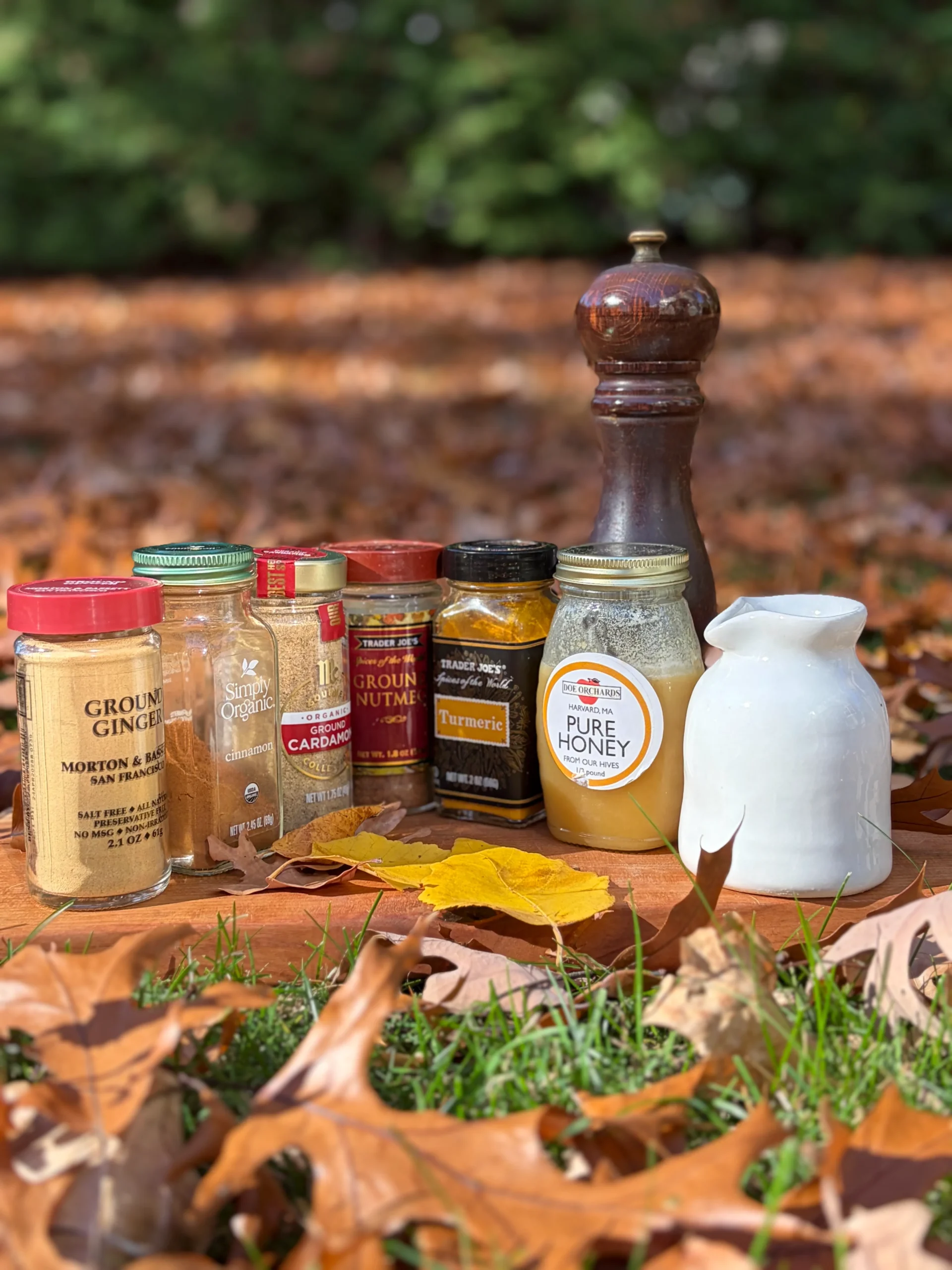
¼ tsp. nutmeg
¼ tsp. ginger
¼ – ½ tsp. turmeric (to taste)
¼ tsp. cinnamon
¼ tsp. cardamom
1 grind of black pepper
1 tsp. honey (added after heating) or turbinado sugar. If vegan, use maple syrup.
Makes 1 serving.
Instructions: Heat milk in a small pot on the stove and add all ingredients except the honey. Once it starts to simmer, remove from heat, stir in the honey, and sip warm.